The Northern Postern
Chapter 1
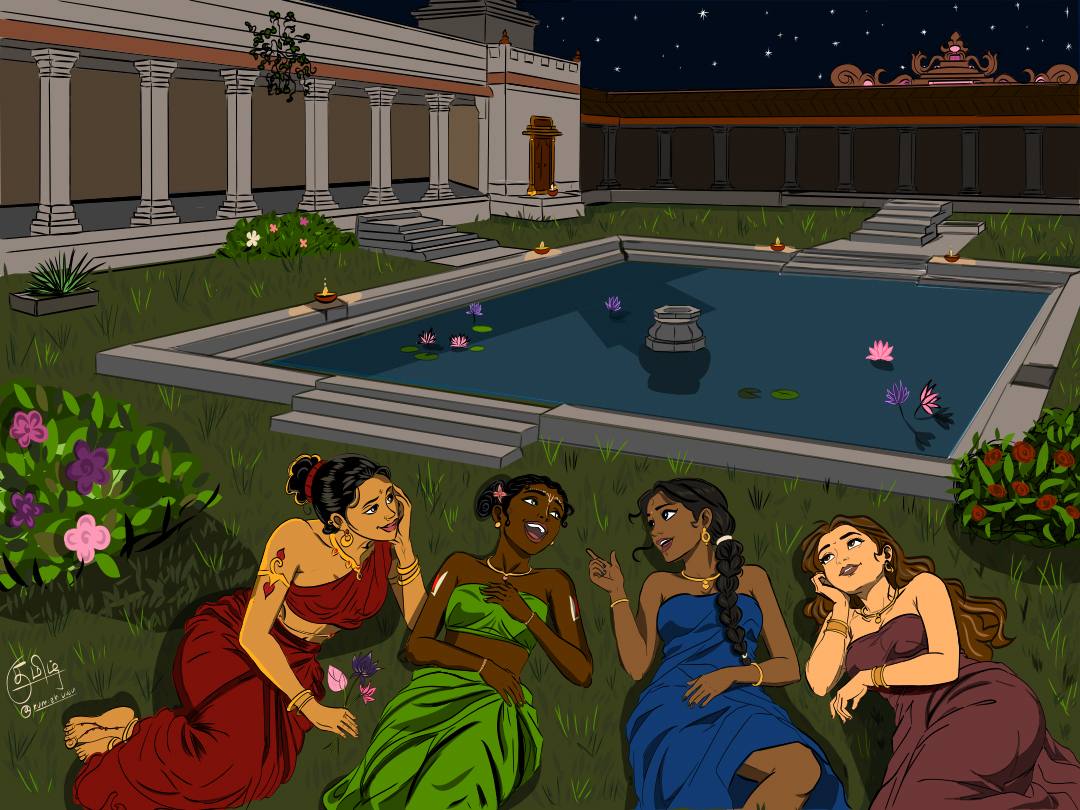
At the rear of the palace anthapuram* (Harem) stood a bronze door leading to the gardens. It was now closed for the night. Age had darkened the metal to black, but the rings remained radiant where many hands had grasped them, and the lower panels bore shallow dents left by the iron ends of the guards' spears. At sunset, two eunuchs pulled the bronze doors together and lowered a tamarind crossbar across them. The wood settled into a dull thud, closing the quarters for the night. The women washed themselves and retired into fresh draperies of satin, their borders needled with regal filaments. Much of this royalty to be confined in the palace! Such splendour was imperative, for it functioned sufficiently to delude them into believing their imprisonment was devoid of humiliation. On the Maharaja’s established concubines, gold thread was stitched delicately on the hems and brushed their anklets at every step. This was how thread defined the hierarchy in the house. On the losing end of royalty, were those who already receded from the maharaja’s interest, and were demoted to silver embroidery. It failed to tarnish in the absence of perspiring fingers. Some, troubled by the squandering of their dignity, spent hours secretly rubbing the silver thread between their palms, to feign an agency rapidly depleting within the place.
The splendour ended at the cloth. The place remained inglorious under ornate embroideries. Newly enslaved girls from a recent war received coloured silk and were expected to admire the generosity of their bondage. They entered the anthapuram as captives from lost kingdoms, and were dressed as ornaments for the setting; the contradiction troubled none who kept the accounts. Some had scarcely learned the chambers before they were assigned to older concubines, who relished the tramplement of women beneath their authority. Could the intermediately oppressed refuse to oppress those at the bottom?
Beneath stars chained to the night sky, the newest girls were charged with tending the night lamps. They carried the shallow clay cups into the passages, lodged them in the corners, drew out the charred wicks, and replenished each one with gingelly oil before the flame dwindled into smoke. By the second watch, the heated grease had soured the enclosed air with a stale, fatty odour that stained upon the walls and thickened overhead with nightly humidity.
Some of the girls had once belonged to royalty themselves, but what standing had they now to complain of the air? One of them, however, smartly injected her influence into an elder concubine’s vanity. “ The smoke has begun to lodge between the strands of your hair,” she wailed, separating a lock between her fingers, “it has dampened your scalp to serious damage!”. By supper, the remark had travelled through panicked chambers. When the elder concubines brought so distressing a matter before their divinely mandated king, the palace gardener was ordered to plant flowers that remained abloom through the night.
For the slave-girls, their lowly status was, in one respect, fortunate. The Maharaja scarcely paid them any heed, and his neglect gave them the freedom to resort to childish joys at all hours. They formed sisterhoods amongst themselves, dipped their ruddy feet into the cool fountain pools, drew red henna over their hands, and painted their bodies with herbs gathered from the garden beds. For rest, they were confined to a low-roofed hall behind the bathing court, where hard wooden platforms ran along the wall and several girls slept side by side. While the concubines enjoyed whole rooms to themselves, the slave-girls possessed barely enough space to turn in their sleep. Whenever they longed for a softer surface, they slipped away to the grass beds beside the pools, lay shoulder to shoulder beneath the night air, and spoke of the families they had lost. Such nights had helped achieve their sisterly bond.
End of Chapter 1.
Get new posts by email
Receive new posts by email. Unsubscribe anytime.